|
Thinking with visual language |
|
Professional development through art-based thought process |
|
Explore infrastructures for cohesive designs |

|
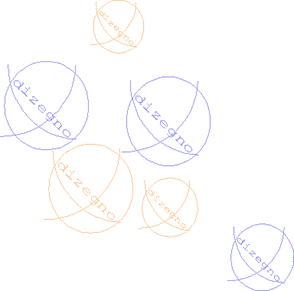
Ideas & building‑block shapes |
|
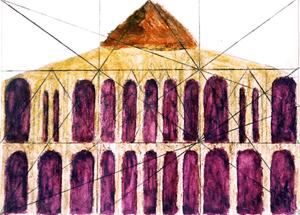
Dynamic structural tools in art help with design organization. They provide frameworks to simplify and clarify complex or ambiguous elements so that intelligent planning can take place. These tools are unique to visual art and make up the foundations of its language. |
|
Devise ways to link parts of a design to form a coherent whole.
Make use of frameworks to explore the networks within the composition.
Determine how the dimensions of elements may be used.
Manage the progress of a design through its stages of development.
|
|
WORKSHOP OBJECTIVES |
|
Examine elements within a framework |
|
Ideas that you will work with and discuss · Identify useful structural tools of design. · Apply structural tools to analyze and integrate design. · Use structural tools to organize and manage design composition. · Use an element’s dimensions as a tool for comparison. · Compare apples and oranges. · Devise ways to anchor the intangible within a context. · Manipulate ambiguity towards new directions. · Harmonize related and unrelated elements. · Re‑configure design systems. · Apply frames of reference. · Define the essential characteristics of a design. · Identify transition steps and elements. |
|
filter |
|
complex phenomena to easily reset direction |
|
Explore relationships |
|
organize |
|
innovate |
|
a shift in function |
|
through limitation and constraint |