|
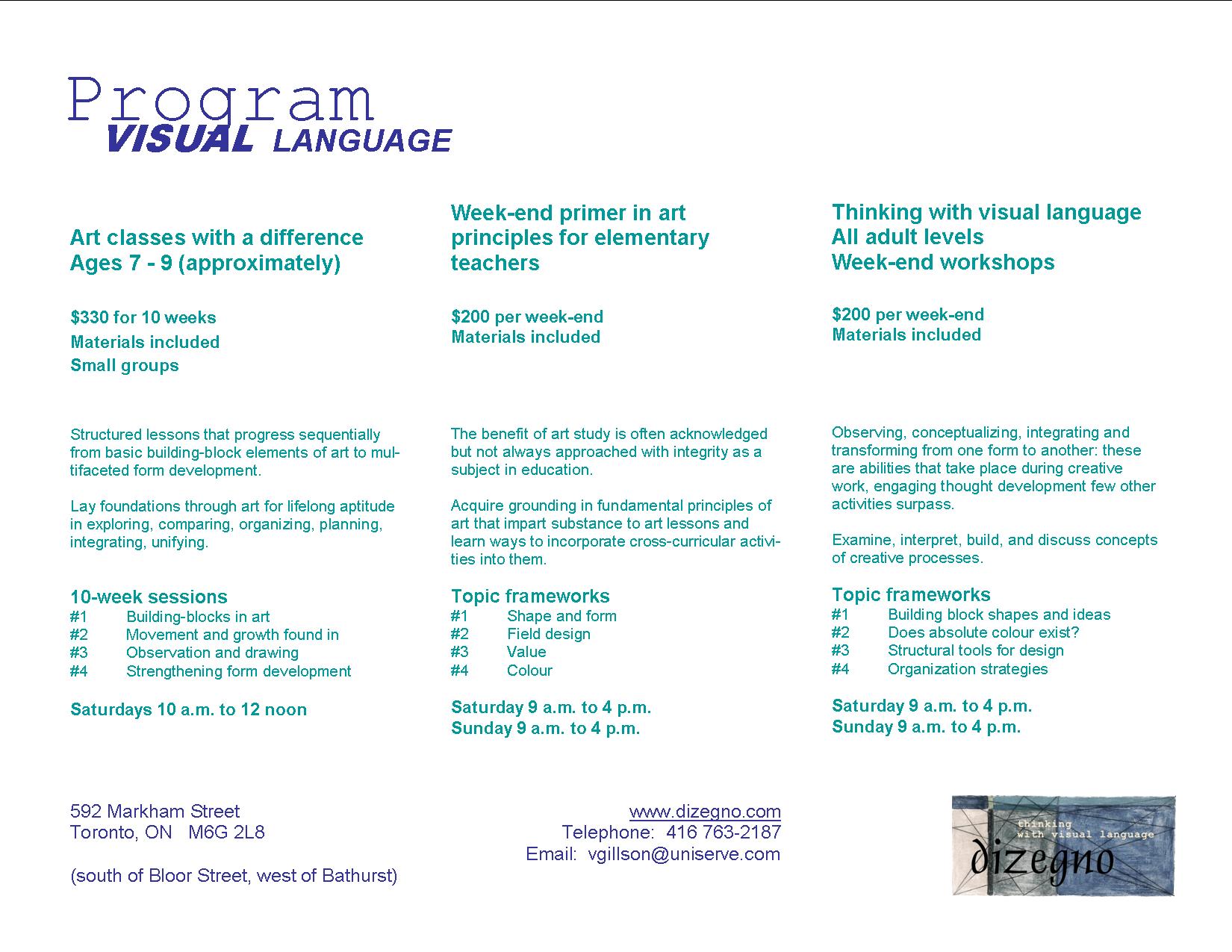
Thinking with visual language |
|
Professional development through art-based thought process |
|
Visual Language for elementary teachers |
|
Workshops in visual thinking |
|
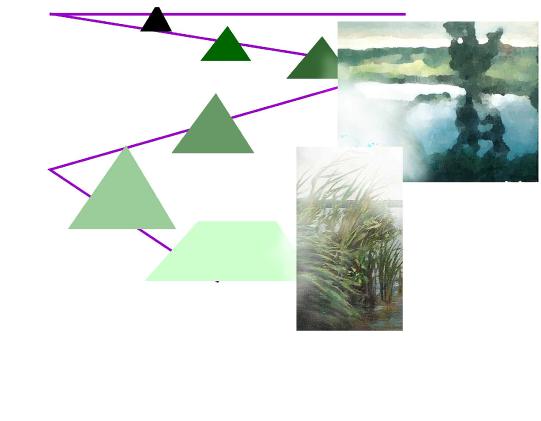
Ideas & building‑block shapes |
|
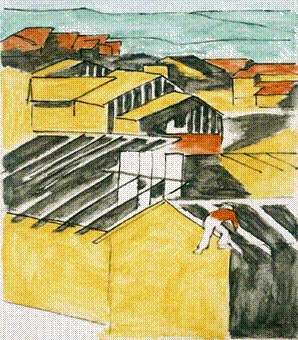
Dynamic interactions in design take place whether they are planned or spontaneous and our perceptions impose order on whatever we see. Artists go to great lengths to understand and control this exchange . |
|
Uncover the hidden order in design.
Establish visual cues to explore the design.
Coordinate multiple interactions.
Generate relationships among distant and unrelated parts.
|
|
WORKSHOP OBJECTIVES |
|
How do you interact with your environment?
|
|
Ideas that you will work with and discuss · Is change due to a physical alteration or shift in focus? · Advantages of different foci: detail vs big picture. · Maintain focus and be aware of context. · Disconnects are opportunities. · Work is a human activity that has dynamics and dimensions. · Interactions, planned or spontaneous, · Rhythm, pattern and design network. · Design architecture. · Dimensions of design and work. · Power dimensions and hierarchy in design. · Social and community dimensions in design. |
|
integrate |
|
to create a unified whole that is more than a sum of parts
|
|
Linear rhythm ^ Non-linear hythm ^ intervals |
|
A cohesive image translates into a coherent message |
|
Interact with pictures and other creative dialogues |